



A practical guide to connected employee services and responsible AI
Executive perspective
HR leaders face pressure to reduce the cost of service delivery while responding to growing expectations for AI. Adding agents across existing applications can appear to address both demands. Yet unless those agents connect around a coherent employee experience, organisations risk creating:
more places to search;
more inconsistent answers; and
more costs to manage.
Our recommendation is to settle two questions early:
Where to start: Where should employees and managers begin when they need help?
How far AI goes: How far should AI be allowed to act?
The answers should guide the architecture, investment priorities, and division of responsibility between people and technology.
This paper explores how to design that digital front door, choose the right level of automation, and establish the foundations for dependable HR services. It develops the recommendations from VirtualResource’s webinar on the digital front door into practical guidance for HR, IT, and transformation leaders. [1]
At a glance
Give employees one clear starting point, designed around their journey rather than the organisation’s systems.
Connect information and action behind that front door, with clear boundaries and a visible route to a person.
Match AI’s authority to the consequences of the task; people stay responsible for decisions on pay, performance, promotion, and employment.
Use AI where interpretation adds value, and conventional workflow where the rules are fixed.
Get the foundations right: owned knowledge, reliable data, end-to-end security, and support skills.
Govern jointly across HR and IT, and measure completed services and full cost, not just fewer tickets.
Start with one journey, pilot an information service, and add actions only as the evidence supports them.
Why disconnected agents can increase HR effort
An organisation may hold employee records in Workday, policies in SharePoint, cases in ServiceNow, and day-to-day conversations in Microsoft Teams. That arrangement can work well. The difficulty arises when each application introduces its own assistant and employees must work out which one can answer their question or complete their task.
An employee preparing for parental leave may need to find the relevant policy, establish their eligibility, submit a request, and ask HR about an exception. If every step starts in a different place, the employee has to connect the process themselves. A conversational interface in each system can leave that underlying effort intact.
Fragmentation has several consequences, each of which can erode the value of earlier investment in employee self-service:
Workarounds: employees return to email because they cannot find help.
Inconsistent answers: agents give conflicting answers from different policy versions.
Duplicated spending: similar capabilities are paid for more than once.
Shadow AI: people turn to unapproved AI tools.
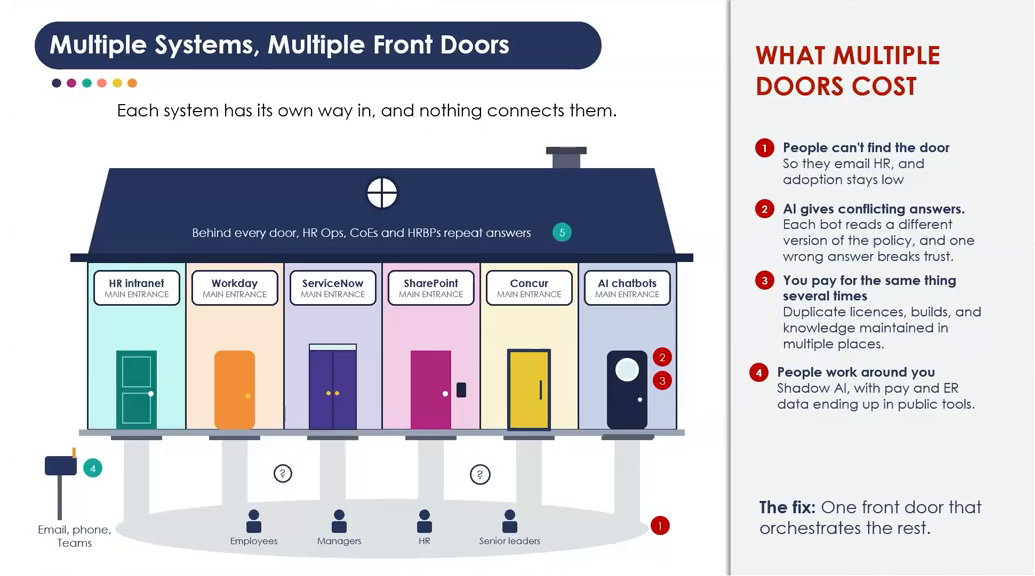
Figure 1. Multiple front doors increase employee effort and fragment the service experience. Webinar 08:10
This also changes the business case. Gartner predicted in June 2025 that more than 40% of agentic AI projects would be cancelled by the end of 2027 because of escalating costs, unclear business value, or inadequate risk controls. This is a forecast, rather than a measured failure rate, but it reinforces the need to test the economics and controls before scaling. [2]
Define the digital front door around the employee journey
A digital front door gives employees a clear starting point for finding information and moving work forward across organisational systems. It might sit in an employee portal, a collaboration tool such as Teams, or an experience such as Sana from Workday. The choice should reflect how people work, the services they need, and the systems the organisation can reliably connect.
Begin with the employee’s intent. Someone asking about parental leave should not need to know which team owns the policy, which application records absence, or where HR manages cases. The experience should identify the relevant information and either help complete the request or guide the employee to the appropriate next step.
A clear starting point can coexist with different access channels. Frontline employees, office workers, and managers may use different devices and have different access needs. Those channels should draw on consistent knowledge, permissions, and service ownership so that changing the route does not change the answer.
Choose the front door by examining actual journeys. Existing usage and service data provide a better basis for the decision than a demonstration alone. Ask:
Where do people begin today?
Which searches fail?
Where do requests leave the formal process and move into email?
Which groups struggle with access?
Connect information and action behind the front door
The parental leave scenario in the webinar illustrates the principle. An employee asks in Teams what they need to do before taking leave. Behind that familiar entry point, an orchestrating agent coordinates the relevant systems and specialist capabilities. Orchestration means selecting the right source or action and combining the results into a useful response.
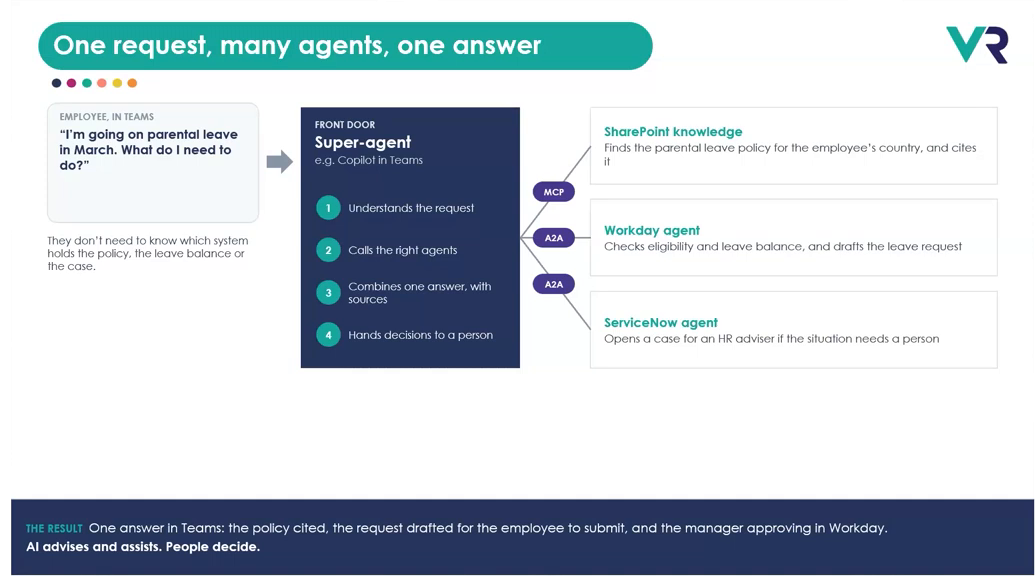
Figure 2. One request can draw on policy knowledge, Workday information, and HR case support. Webinar 10:30
Stage | What the service needs to do |
|---|---|
Understand the request | Establish the employee’s context and clarify missing details, including location and intended dates. |
Retrieve relevant information | Consult the current policy and, where authorised, retrieve eligibility and leave information from the system of record. |
Prepare the next step | Explain the applicable guidance and draft or initiate a request within agreed permissions. |
Apply human judgement | Route approvals and exceptions to the appropriate manager or HR adviser, carrying the relevant context forward. |
The demonstration also connected leave requests with an optional Outlook out-of-office action. Other examples brought together benefits information, daily tasks, and expense approvals. These illustrate the potential to organise services around what someone is trying to accomplish across several applications.
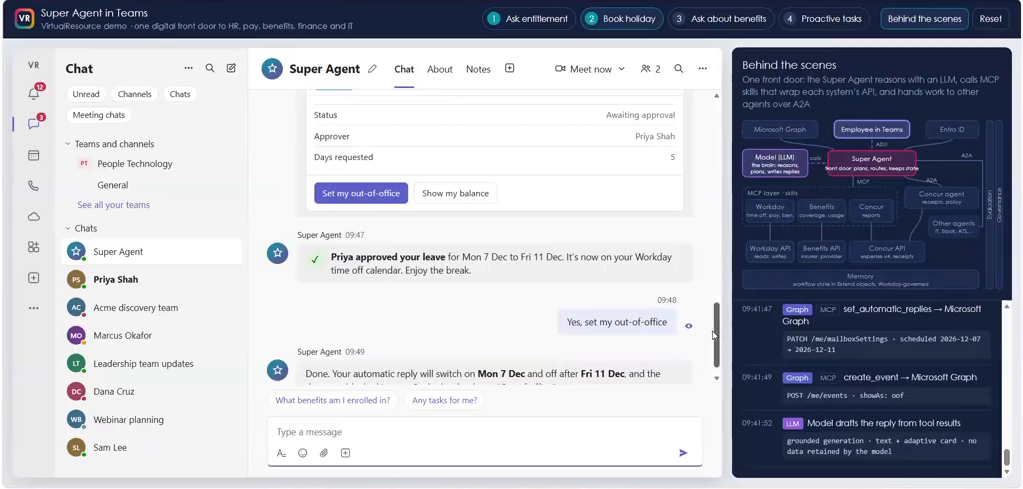
Figure 3. Illustrative Teams demonstration linking a leave journey with an optional out-of-office action. Webinar 22:50
Every additional action needs a clear boundary:
Employee-led actions: setting an out-of-office message should follow the employee’s instruction.
Human judgement: a case requiring HR judgement should reach an adviser with the conversation and supporting information attached.
Partial failure: if part of a request fails, the employee should be able to see what completed and what still needs attention.
Direct links to an existing application remain useful. A complex task may be easier to complete in its established interface, particularly where that interface already provides the necessary validation and approvals. The front door can explain the next step and take the employee there without recreating the whole transaction in conversation.
Match AI authority to the work
We distinguish between advising, assisting, delegating routine work, and providing bounded services without reviewing every interaction. These are useful design choices. Greater autonomy should depend on the consequences of the task, the reliability of the service, and the organisation’s agreed risk appetite.
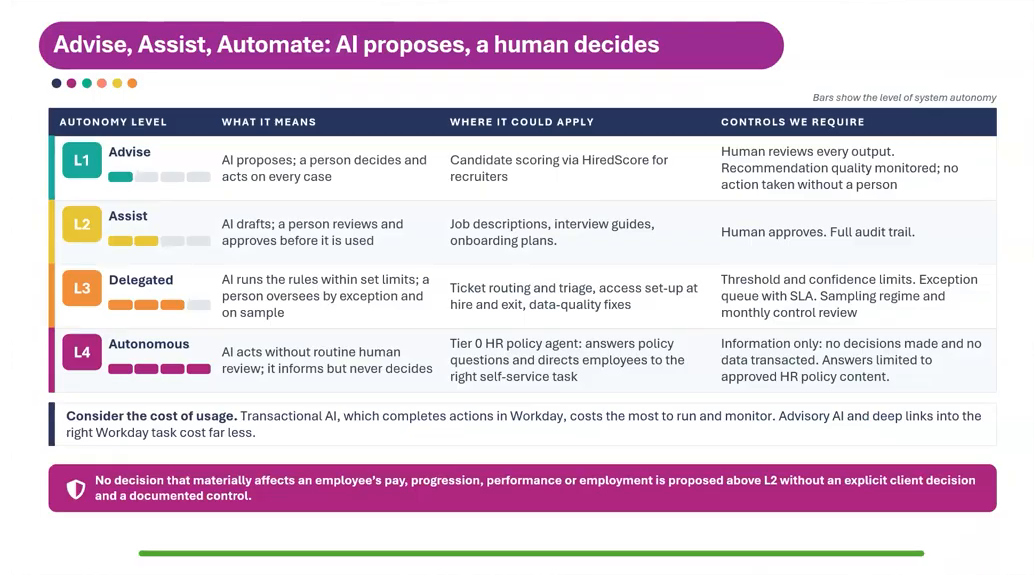
Figure 4. The webinar distinguishes four modes of AI support and the human controls each requires. Webinar 29:50
Mode | Illustrative use | Expected boundary |
|---|---|---|
Advise | Explain relevant information and suggest a next step. | A person evaluates the advice and makes the decision. |
Assist | Draft a job description, interview guide, or employee communication. | A person reviews the content before it is used or published. |
Delegate routine work | Route a service request or flag a data inconsistency. | Predefined permissions, exception rules, and monitoring limit the action. |
Provide bounded self-service | Answer routine questions using approved policy content. | The service escalates uncertainty and stays within its authorised knowledge and scope. |
Bounded self-service does not mean unrestricted decision-making. An assistant can explain a policy without being authorised to decide how that policy should apply to a disputed individual case. Likewise, drafting a compensation recommendation is different from approving a change to someone’s pay.
Our recommendation
At VirtualResource, our recommendation is that people retain responsibility for decisions affecting an individual’s pay, performance, promotion, or employment. AI can help gather information and prepare material for review. Human oversight must give the reviewer enough context, time, and authority to challenge the output and make an independent decision.
Before permitting an action, ask whether it:
uses sensitive information;
materially affects someone;
is difficult to explain; or
would be hard to reverse.
More consequential work needs stronger review and narrower permissions. Even an apparently routine policy answer needs a dependable escalation route when the employee’s circumstances do not fit the documented guidance.
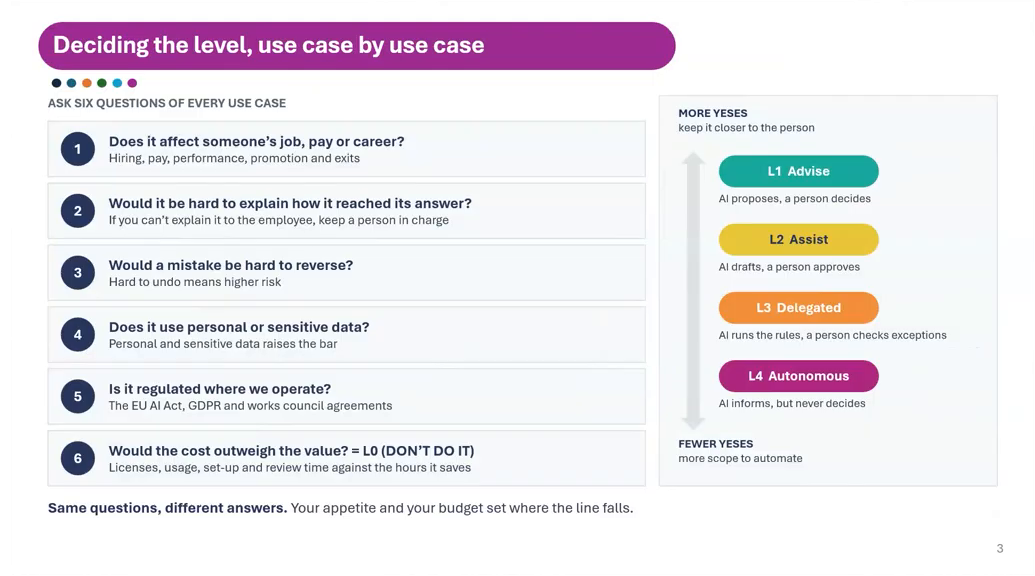
Figure 5. Choose the level of AI authority for each use case by assessing consequences, explainability, reversibility, data, and cost. Webinar 32:50
Use AI where interpretation adds value
A service may need AI to understand a question expressed in everyday language, retrieve relevant guidance, or draft a clear response. The subsequent steps may follow fixed rules and work well through conventional automation. Combining those approaches can keep the experience useful while making execution more predictable.
For example, in a leave request:
AI interprets the question and explains the relevant policy.
A standard workflow checks required fields, routes the request, and records approval.
Where routing depends entirely on a known country, request type, and employee group, adding a language model to that decision may introduce cost without improving the result.
Evaluate each step separately. The front door does not need to complete every transaction itself. Sometimes the best outcome is an accurate explanation and a direct link to the correct task. In other cases, completing a simple action within the employee’s workspace removes enough effort to justify the additional integration and operating cost.
Establish the foundations for dependable answers
Organisations can begin without perfecting their entire HR environment. Readiness should be assessed against the chosen service. A policy assistant needs approved, current content and appropriate access. An assistant supporting recruitment or offers also depends on reliable organisational, job, and compensation data. Four foundations matter most:
Knowledge with clear ownership. Policies should identify the audience, location, effective date, and person responsible for review. Superseded documents should not compete with current guidance. Multiple repositories can remain in place, provided there is an agreed authoritative source for each subject and a way to resolve contradictions.
Reliable employee and organisational data. This data determines which information and actions are relevant. Incorrect reporting lines can route an approval to the wrong manager. Inconsistent job architecture can weaken recruitment guidance. Incorrect grades or compensation ranges can produce misleading offer information. A fluent response cannot compensate for unreliable source data.
Security across the complete journey. A person’s ability to ask a question must not grant access to information they could not otherwise see. Each connected system needs to enforce the intended permissions, including any distinction between acting as an employee, a manager, or an HR professional.
Skills and support capacity. The organisation needs people who can maintain knowledge, evaluate answers, investigate failures, and manage changes to integrations. Employees and managers also need to understand what the service can do and when to seek help from a person.
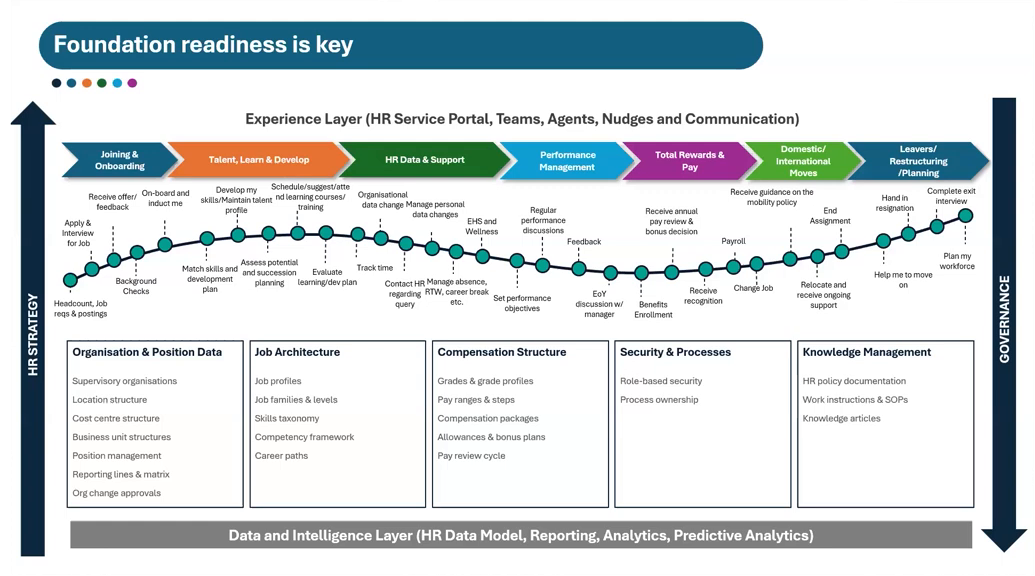
Figure 6. The employee experience depends on reliable HR foundations across the employee lifecycle. Webinar 39:00
Make governance part of service delivery
HR and IT need joint accountability for the front door:
HR brings policy ownership, service expertise, and the context for people decisions.
IT brings identity, integration, security, and operational support.
Together they should define what an agent is permitted to do, who approves changes, and how incidents are handled.
Four controls are essential for every agent:
Identify each agent.
Authenticate it.
Authorise its access and the actions it can take.
Audit its activity through a retained audit trail.
An agent register should also show its purpose, owner, dependencies, and current status. When an agent is retired, its access and connections need to be removed and affected workflows checked.
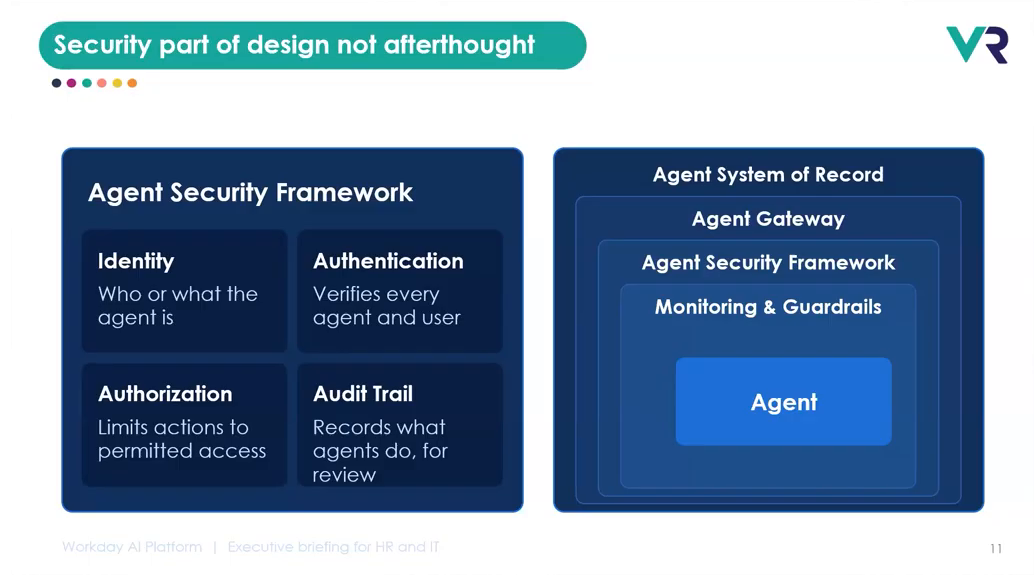
Figure 7. Agent identity, authentication, authorisation, and audit sit within a wider governance framework. Webinar 15:45
Workday’s Agent System of Record is one example of tooling for agent visibility and control. Workday describes capabilities for registered agent oversight, access management, activation and deactivation, and audit and tracing within Sana. Product scope and availability should be checked against the organisation’s subscriptions and current release. [3]
An integration protocol alone does not establish those controls. Model Context Protocol, or MCP, can provide a standard way for AI applications to access tools and context, while agent-to-agent approaches support coordination between agents. The webinar also highlighted differences in integration maturity. Teams should validate the actual supported connections, permissions, and failure behaviour for their proposed journey.
Governance also needs an owner for the employee experience across functions. Recruiting, reward, and IT may each manage their own service successfully while the overall manager journey remains fragmented. Assign responsibility for how an employee or manager completes the full journey, alongside the owners of the individual processes.
Measure completed services and the full cost
A useful pilot establishes a baseline before launch. Record the volume of the selected request, time spent by employees and HR, repeat contacts, and current service quality. Compare the same measures during the pilot, including the effort transferred to employees or managers.
Measure | What to examine |
|---|---|
Completed service | Whether the employee reached the intended outcome, including any handoff or transaction. |
Answer quality | Accuracy, use of the correct policy, and appropriate handling of uncertainty and exceptions. |
Employee effort | Time spent, repeated information, abandoned journeys, and repeat contacts. |
Adoption and trust | Use by the intended audience, feedback, and reasons people return to email or other channels. |
Operating cost | Cost per resolved request, including technology, knowledge upkeep, review, support, and rework. |
A reduction in tickets is useful only if employees are getting the help they need. An unanswered question or an abandoned conversation can also avoid creating a ticket. Review resolution alongside accuracy, repeat contact, and employee feedback.
The financial assessment should include:
licences;
consumption charges such as tokens or credits;
integration maintenance and monitoring;
content management; and
human intervention.
Separate capacity released from cash savings: reducing handling time creates financial savings only where the organisation can translate that time into a real change in cost or output. A successful demonstration establishes neither benefit on its own.
A practical starting plan
The following sequence develops the webinar’s recommendations into a starting plan. Its pace will depend on the selected service, access to dependable information, and the organisation’s ability to support the pilot.
Select a specific employee journey. Use service data and conversations with employees to identify a recurring source of effort. Define the audience, expected outcome, and baseline measures. Agree where the journey begins and name the person accountable for its completion.
Prepare the knowledge and boundaries. Confirm the authoritative sources and their owners. Set permissions, review requirements, and escalation rules. Test common questions and difficult variations, including missing information, conflicting policies, and requests outside the service’s remit.
Pilot a bounded information service. Start with answers and guidance to the correct next step for a defined group. Give employees a visible way to reach a person. Review failures with HR advisers and knowledge owners, and use that evidence to improve the content and service design.
Add selected actions where the evidence supports them. Extend the journey to drafting, routing, or simple transactions only when permissions, approvals, and recovery arrangements have been tested. Compare the benefit of completing the action in conversation with directing the employee to an existing task.
Decide whether to expand, redesign, or stop. Scale when the service demonstrates acceptable quality, useful adoption, manageable support needs, and a credible operating cost. Extend to the next journey using what the pilot has established about ownership and controls.
The decisions that shape the experience
The digital front door should make it easier for someone to get the right help and complete their work. That outcome depends on consistent knowledge, connected processes, appropriate permissions, and clear responsibility when a person needs support.
Start by deciding where employees should go and what the service is authorised to do. Then:
build the first journey around trusted information;
keep people accountable for consequential decisions; and
use evidence from delivery to guide expansion.
That gives HR and IT a practical basis for investing in AI while maintaining control of service quality and cost.
VirtualResource helps organisations assess their HR service experience, strengthen the foundations for AI, and connect Workday with the wider technology environment. To explore your digital front door priorities, speak to our team or watch the webinar for the discussion and demonstrations behind this paper.
Sources and scope
This paper synthesises the webinar and adds implementation guidance, including the starting plan and suggested measures. The scenarios illustrate possible service designs; they are not claims of measured client outcomes. Technical capabilities depend on configuration, supported integrations, licensing, and release availability.
[1] VirtualResource. The Digital Front Door webinar recording. Key passages: 06:20-09:21, the two design questions and fragmentation; 09:24-18:12, orchestration and governance; 18:24-28:36, demonstrations; 28:44-41:20, authority, economics, and readiness; 41:30-43:11, recommendations.
[2] Gartner. Gartner Predicts Over 40% of Agentic AI Projects Will Be Canceled by End of 2027. Published 25 June 2025. Forecast cited for context, not as an observed outcome.
[3] Workday. Sana From Workday Brings The Agentic Experience To Every Employee. Product reference checked 6 November 2026. The source notes that some capabilities are in early access.